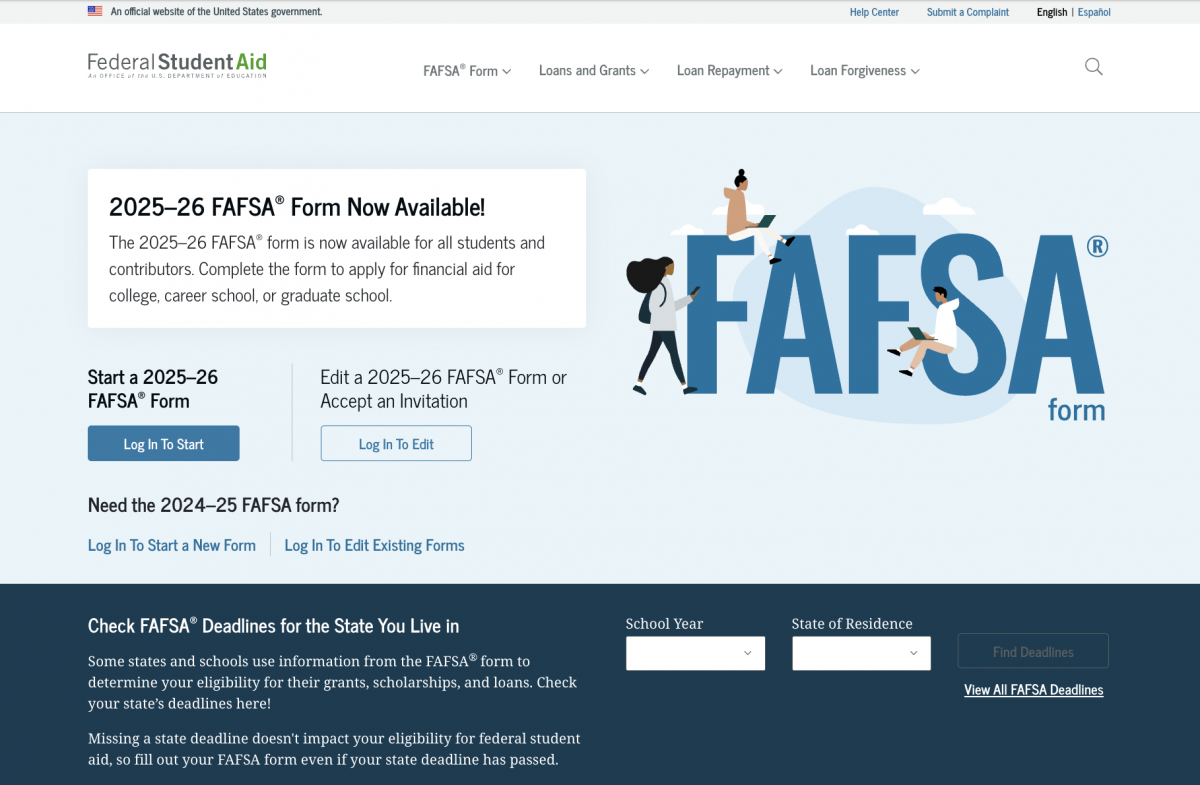
I led UX research and design work for the U.S. Department of Education’s Free Application for Federal Student Aid, better known as the FAFSA. My work included leading nationwide research with students and families, supporting the phased launch of the 2025–26 and 2026-27 form, and helping redesign one of the most difficult parts of the experience: inviting a parent or other contributor to complete their portion of the form.
Problem
Each year, millions of students and families complete the FAFSA to apply for grants, loans, and work-study funding for college.
The FAFSA is not a typical online form. Its requirements are shaped by legislation, tax policy, financial-aid regulations, and complicated family circumstances. Dependent students must also coordinate with a parent or other contributor, who may need to create an account, provide consent for federal tax information, complete a separate section, and sign the form.
Following the difficult launch of the redesigned 2024–25 FAFSA, FSA needed to rebuild confidence in the experience and identify issues before the next form was released to the entire country.
For the 2025–26 FAFSA, the Department used a phased beta launch. Starting in October 2024, the form was released to limited groups of students and schools before becoming generally available on November 21, 2024.
Our challenge was to build a research program that could identify problems in real time, help teams distinguish isolated incidents from systemic issues, and turn findings into changes before millions of families began using the form.
Approach
I helped develop a continuous research program that combined moderated usability testing, field research, survey monitoring, contact-center feedback, and product data.
Instead of relying only on controlled usability studies, we wanted to observe students and parents completing their real FAFSA applications in the environments where they normally seek help.
Our research included:
- More than 20 moderated usability sessions with 31 students and parents
- Direct observation of hundreds of families at FAFSA completion events
- Research a schools and community-based organizations around the country
- Daily analysis of post-transaction surveys and beta issue reports
- Review of contact-center feedback and product data
- Interviews and feedback from financial-aid professionals
- Follow-up sessions after participants’ applications were processed
Participants included dependent and independent students, parents, first-generation students, English learners, veterans, adult students, foster youth, students experiencing homelessness, and families with lower incomes.
The participant mix helped us evaluate whether the FAFSA worked across a wide range of circumstances—not simply for students with straightforward family and financial situations.
FAFSA beta events gave us an opportunity to observe hundreds of students and parents completing real applications.
Research at FAFSA events
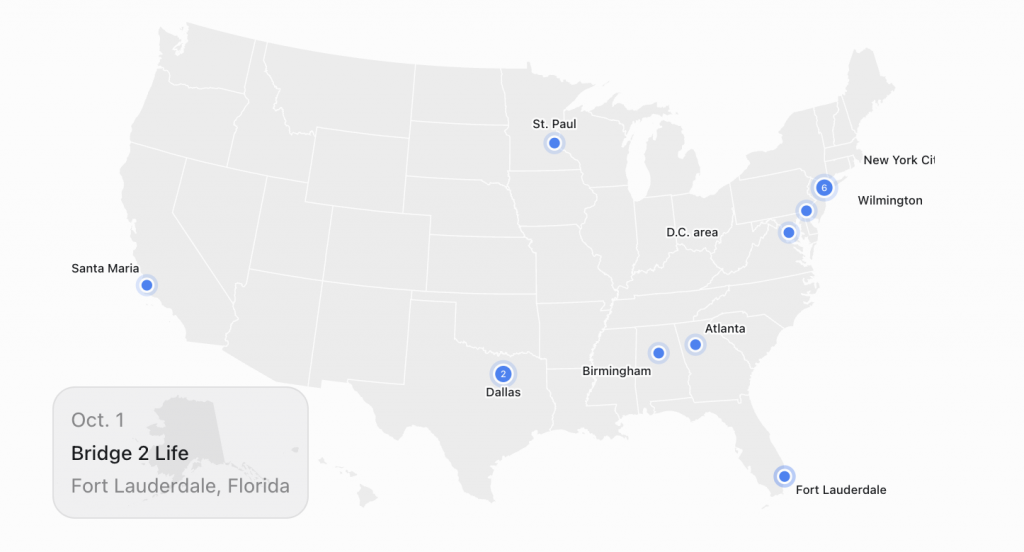
FSA partnered with schools and community-based organizations to hold FAFSA completion events around the country.
I led a team of UX researchers (FSA folks, U.S. Digital Service, and Accenture contractors) who all attended events in cities including Atlanta, Birmingham, Dallas, Fort Lauderdale, Minneapolis, New York City, Northern Virginia, and Santa Maria, California.
At each event, researchers:
- Observed students and parents completing the form
- Conducted short contextual interviews
- Documented technical and usability issues
- Gathered feedback from counselors and financial-aid professionals
- Submitted an end-of-day summary of emerging findings
We instructed UX researchers to “observe first, ask questions second, and help third.” These were real students completing a consequential government form, not participants working through fictional scenarios.
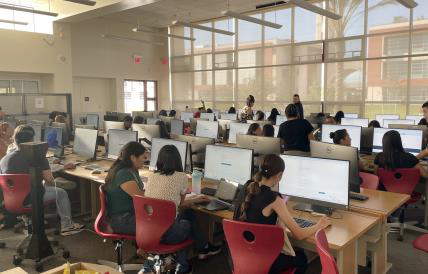
Students and parents complete the FAFSA form at an event at Santa Maria High School in California.
The events revealed behaviors that were difficult to reproduce in traditional usability testing. Students frequently drove the process for their families. Some completed portions of the form through a parent’s account. Others called parents to obtain authentication codes or personal information.
We also saw how important counselors and community organizations were to successful FAFSA completion. Their support sometimes concealed confusing questions or interaction problems that would have blocked a family completing the form alone.
Observing families complete real applications helped us uncover issues that did not always emerge in a controlled research session.
What we learned
Feedback on the 2025–26 form was largely positive. Students and parents frequently said that it was faster and easier than they expected. From November 1 through November 20, satisfaction for initial submissions remained between 91 and 94.
Research also identified several areas where the experience continued to create confusion:
- Students had difficulty inviting and matching parent contributors
- Legal-residency and financial questions were difficult to interpret
- Students did not always understand whether a college had been added successfully
- Blank answers on the review page made families worry that their form was incomplete
- Participants frequently overlooked help text and tooltips
- Parents struggled to locate invitations on their StudentAid.gov dashboard
- Students did not always understand their form status or submission summary
- Participants could not easily find actions such as canceling a correction
The research produced more than 30 recommendations for improvements to the form and its surrounding experience.
Several findings led to immediate content updates and bug fixes. For example, research uncovered a critical issue in the college-search interaction that sometimes displayed or added the wrong institution. The development team addressed the issue in a code update.
Top Findings
- Continued issues with inviting a parent contributor, especially among non-SSN parents due to strict data matching and poor conceptual model
- There continues to be slight confusion on a few questions such as date of legal residence question and number of family members in college
- Adding colleges and selecting the correct one sometimes didn’t work as expected and discovered a critical bug affecting the college search typeahead
We consolidated findings from usability testing, FAFSA events, surveys, and contact-center feedback into a shared set of recommendations.
Contributor invite
Inviting a parent or other contributor was one of the most significant problems we identified.
In the existing experience, a student had to enter personal information that exactly matched the contributor’s StudentAid.gov account. This could include the contributor’s name, date of birth, address, and Social Security number.
Students frequently did not know this information. Minor differences—such as “Road” instead of “Rd.”—could prevent the invitation from matching the correct account. The problem was especially difficult for parents without Social Security numbers.
Our analysis showed the scale of the issue:
- Approximately 5.7% of applications—about 850,000—stopped at the contributor invitation
- Funnel data showed a 16% drop between the preceding form step and successful creation of a parent contributor
- Up to 40% of students may have needed to pause the form to obtain a parent’s Social Security number
- More than 10,000 contributor-invitation contact-center cases were opened during one two-week period
The invitation process placed the burden on students to know and accurately enter information belonging to someone else. It also did not match the way familiar invitation systems work on other digital products.
Contributor invite research
During the FAFSA beta, we showed early concepts to eight students and parents to gather directional feedback.
We then developed mid-fidelity prototypes and conducted 45-minute usability sessions with an additional group of dependent students and parents.
We tested several approaches:
- The existing personal-information matching process
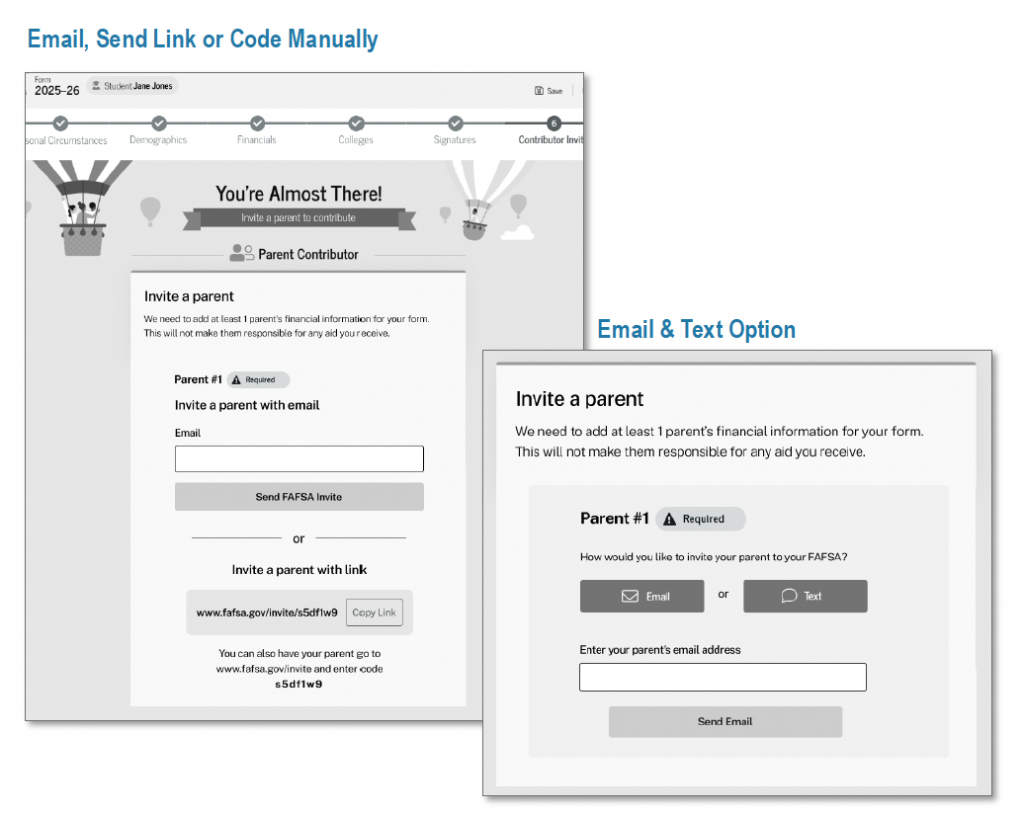
- An invitation sent by email with a one-time code
- A link that students could copy and send themselves
- Email and text-message options
- Codes requiring additional identity information
- Different locations for the invitation within the form
Personal information was a barrier
Every participant said that they—or their student—would not know all the information required by the existing invitation.
A parent’s Social Security number was the most significant barrier, but participants also raised questions about dates of birth, account email addresses, and last names.
Requiring this information could force students to leave the form before completing their own section.
Students wanted to finish their section first
All participants preferred to invite a contributor after completing and signing the student section.
The existing invitation appeared partway through the student experience. Participants saw the end of the student section as a more natural handoff between the student and parent.
Participants preferred an invitation code
Participants generally preferred a familiar invitation-code model over exact matching based on personal information.
Email felt familiar and secure. Participants also appreciated having a link or code that they could share manually if the email did not arrive.
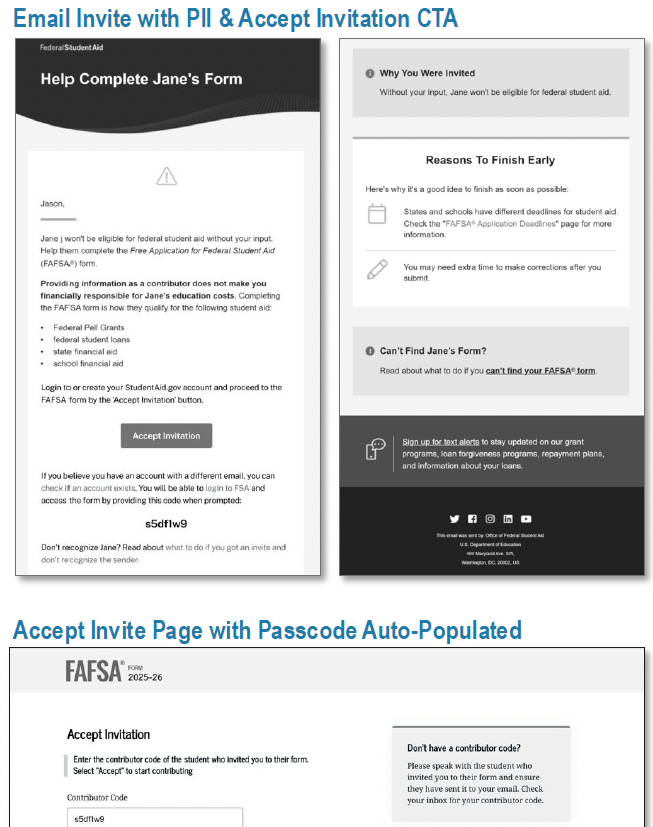
Replacing personal-information matching with a one-time code removed the need for students to know a parent’s Social Security number.
Initial Recommendations
Based on the research, we recommended:
- Replace personal-information matching with a one-time contributor code
- Allow a student to initiate an invitation using an email address
- Give students the option to copy and share the link or code manually
- Move the invitation to the end of the student section
- Carry the code through the authentication process when possible
- Take contributors directly to a clear “Accept invitation” action
- Make it clear whether the student or contributor is expected to act
- Design states for canceled, expired, and previously accepted invitations
- Conduct additional testing with English learners and people with disabilities
These recommendations combined usability findings with product analytics, survey feedback, contact-center data, legislative requirements, and technical considerations.
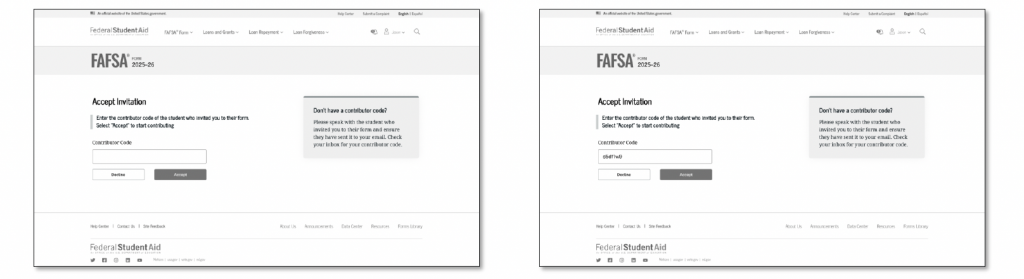
Early concepts explored different ways to invite a contributor without requiring the student to enter the contributor’s personal information.
Building Empathy
Research findings can easily become another presentation that product teams review and then forget.
To make the findings actionable, I helped organize a large “Building Empathy” session for the FAFSA team. Staff worked in cross-functional groups to review specific problems observed during the beta and develop recommendations for product leadership.
Topics included:
- Contributor invitations
- Confusing financial questions
- College search
- The FAFSA review page
- Form corrections
- Application status
- The submission summary
- Account creation and identity matching
The workshop gave staff from design, policy, product, engineering, operations, and communications a shared understanding of what students and parents had experienced.
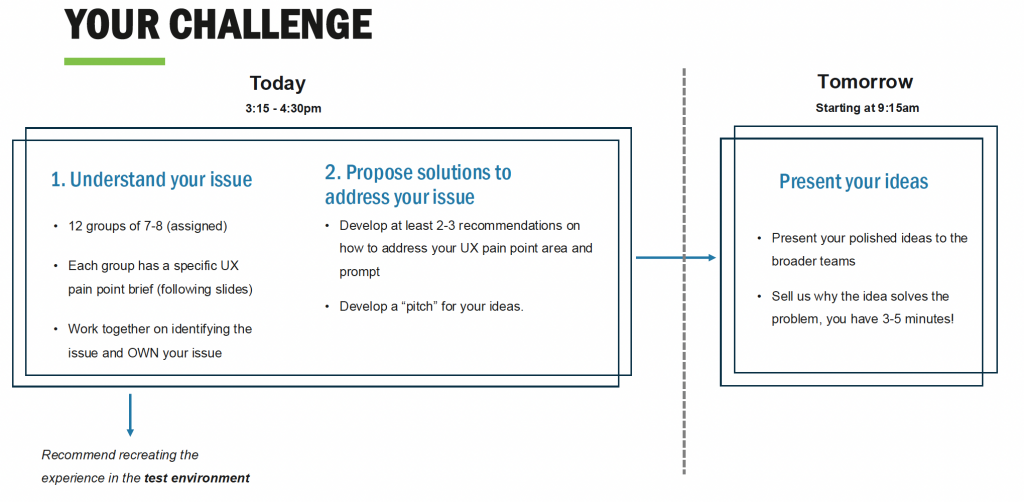
Cross-functional groups used evidence from research to develop and prioritize recommendations for FAFSA leadership.
Results
Our research and design work helped FSA:
- Observe hundreds of students and parents completing real FAFSA applications
- Conduct more than 20 in-depth usability sessions during the 2025–26 beta
- Establish a continuous feedback loop across research, surveys, contact-center feedback, and product data
- Produce more than 30 recommendations for immediate and longer-term improvements
- Identify content issues and product bugs before the national launch
- Maintain initial-submission satisfaction scores between 91 and 94 during the later beta period
- Establish field research as a central part of the FAFSA launch process
For the 2026–27 FAFSA, FSA implemented a new contributor invitation process using a one-time code. Students could initiate an invitation with an email address instead of having to know and accurately enter a parent’s Social Security number and other personal information.
The release also included improvements to the FAFSA review page, transactional emails, account verification, account recovery, and authenticated navigation.
The most important result was not a single interface change. We established a new way of evaluating FAFSA: observing the service in real environments, combining multiple sources of evidence, and working with product teams to address problems before they affected millions of families.
Lessons Learned
- Field research revealed family dynamics and workarounds that were difficult to reproduce in a traditional usability session.
- Partnering with schools and community-based organizations helped us reach students who are often left out of government research.
- Combining qualitative research with survey, contact-center, and behavioral data made our recommendations more persuasive.
- Daily synthesis during the beta allowed product teams to respond while research was still underway.
- Opening research sessions and workshops to the larger product team helped create shared understanding and buy-in.
- Research was most valuable when we translated findings into specific product and technical recommendations.
- Even when legislation limits the solution space, observing users can reveal better ways to implement those requirements.