I worked as the UX design lead for the U.S. Department of Education’s overhaul of the entire income-driven repayment (IDR) application and introduction of a new, more affordable IDR plan.
Problem
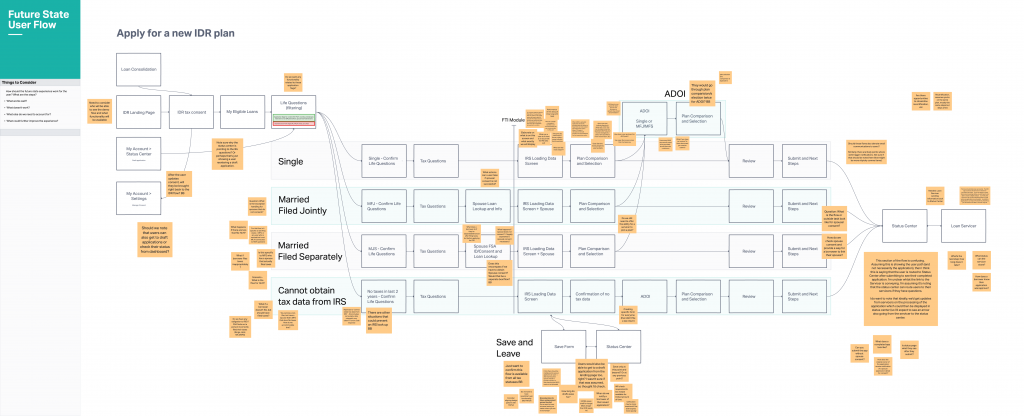
The FUTURE Act was a new law that cleared the way for Federal Student Aid (FSA) to build new back-end integrations with the Internal Revenue Service (IRS) to more quickly connect to a student loan borrower’s tax information to calculate family size and adjusted gross income. This was groundbreaking for borrowers, as this new integration allowed seamless transfer of information and more quickly determined eligibility and payment amount right in the application. This was a forcing function for FSA to build a new application process, and launch a feature we call “autorecertification” meaning that an IDR borrower would only need to apply once, and we’d recertify your income each year and recalculate their payment annually without the need for any forms.
Approach
Given the legislative mandate of a new IRS integration, we needed to understand the entire student loan servicing environment (the companies FSA contracts to actually collect/process student loan payments) and what our limitations where. As with most government projects, we were working under tight deadlines.
I started with an initial discovery sprint working with others to interview student loan borrowers on the current experience with repaying loans under an IDR plan. We also conducted usability testing on the legacy application, and held several interviews with student loan servicers to unpack their back-office operations. Our main insights were:
- Borrowers are often surprised to find there are multiple IDR plans; 50% have their servicer pick a plan
- Paper application volumes are higher than expected, with up to 30% being processed as paper
- Critical IDR concepts, like when to enroll and requirements to “recertify” confuse borrowers
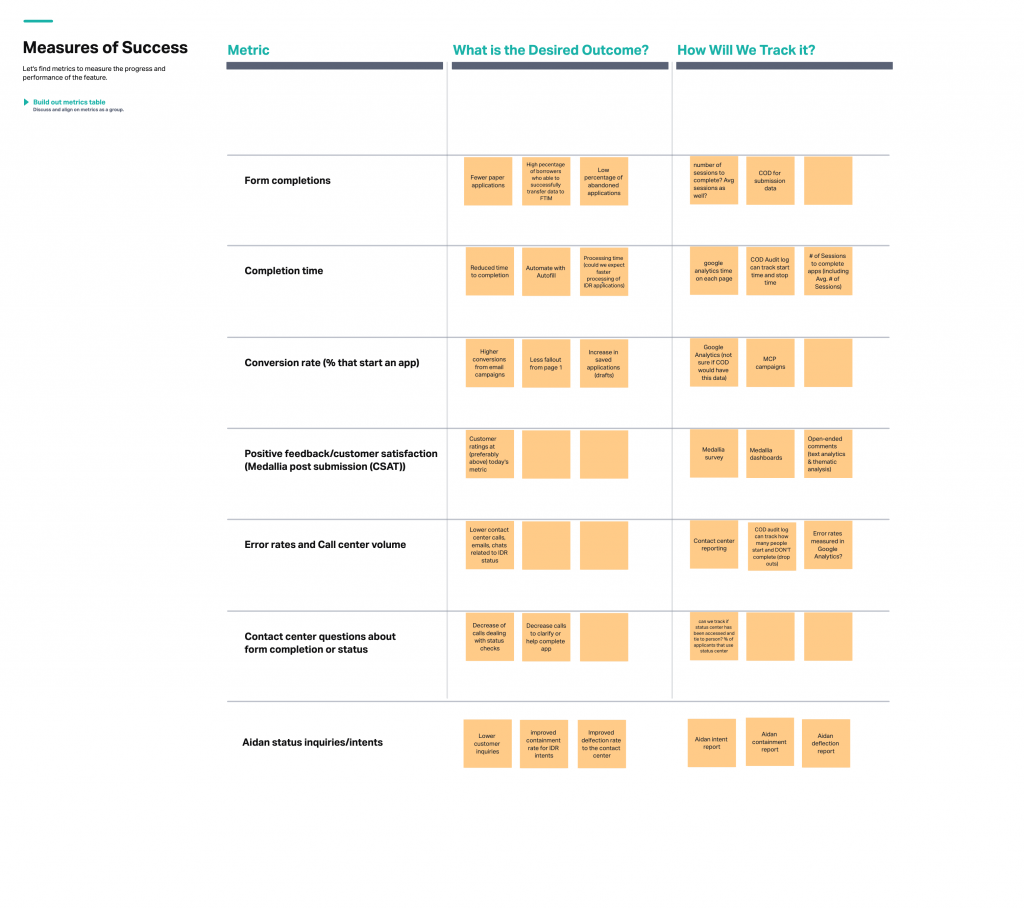
- IDR borrowers top reason for calling is to get a status update on their application as they wait until their servicer processes their app
- Providing documentation of income after the application can be a cause of fallout and requires lots of back and forth with a loan servicer. Servicers spent a considerable amount of time manually calculating plans with and processing paper apps
- IDR forgiveness is often misunderstood; many don’t understand remaining balances may be counted as income. Borrowers want more clarity on their progress toward IDR forgiveness
Initial Recommendations
These helped FSA save time and cost early on as the it was before the work was under contract with the development vendor and servicing teams.
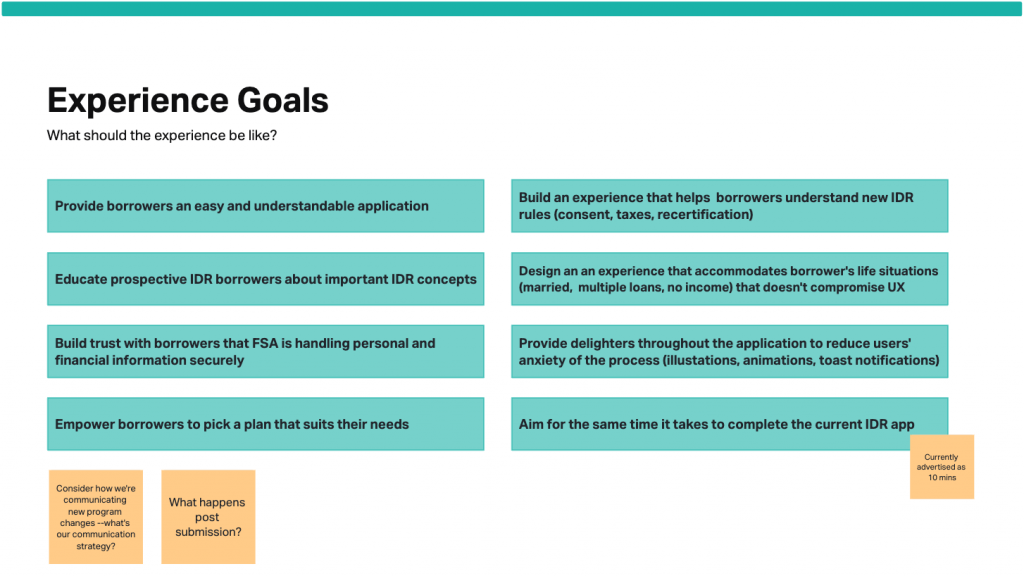
- Allow borrowers to save applications along the way to gather necessary income documentation (if needed)
- Include the option for borrowers to upload income documentation in the application vs. having to mail/process it afterwords
- Allow loan servicers to access manual uploaded income documentation within an electronic application; provide a way for borrowers to report their income/pay frequency
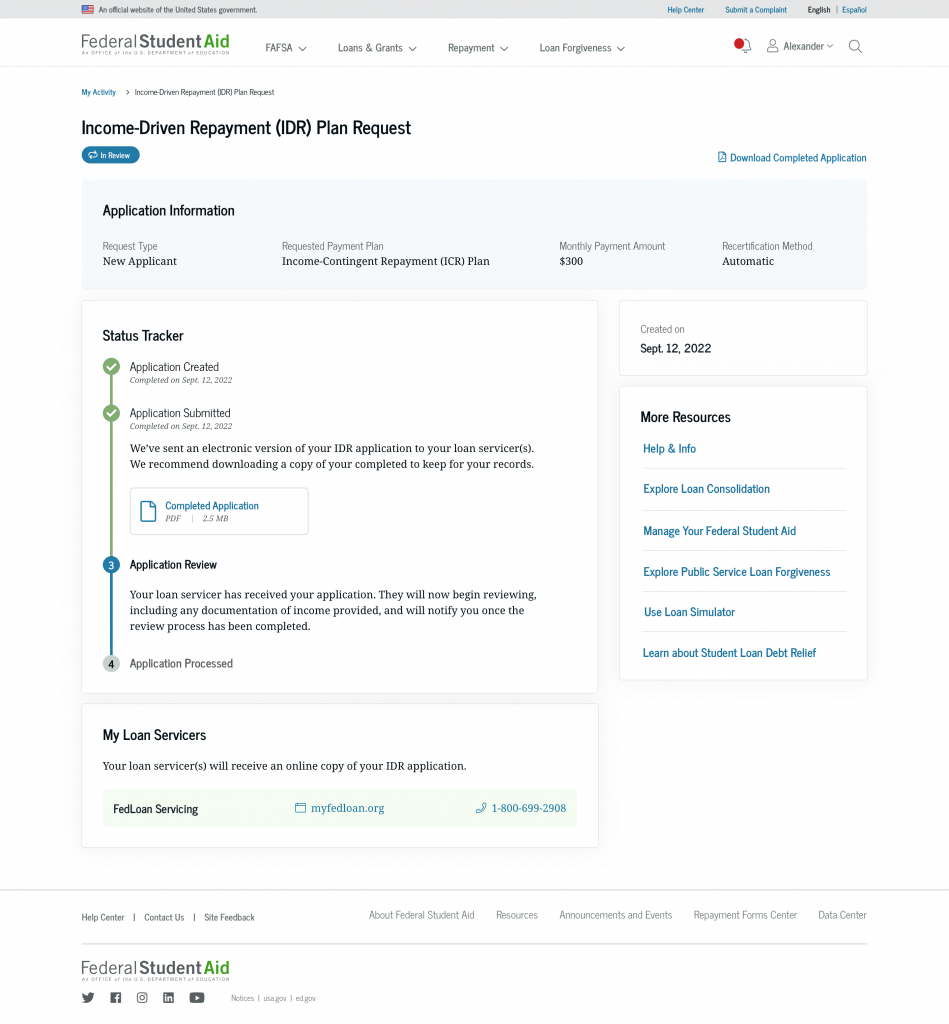
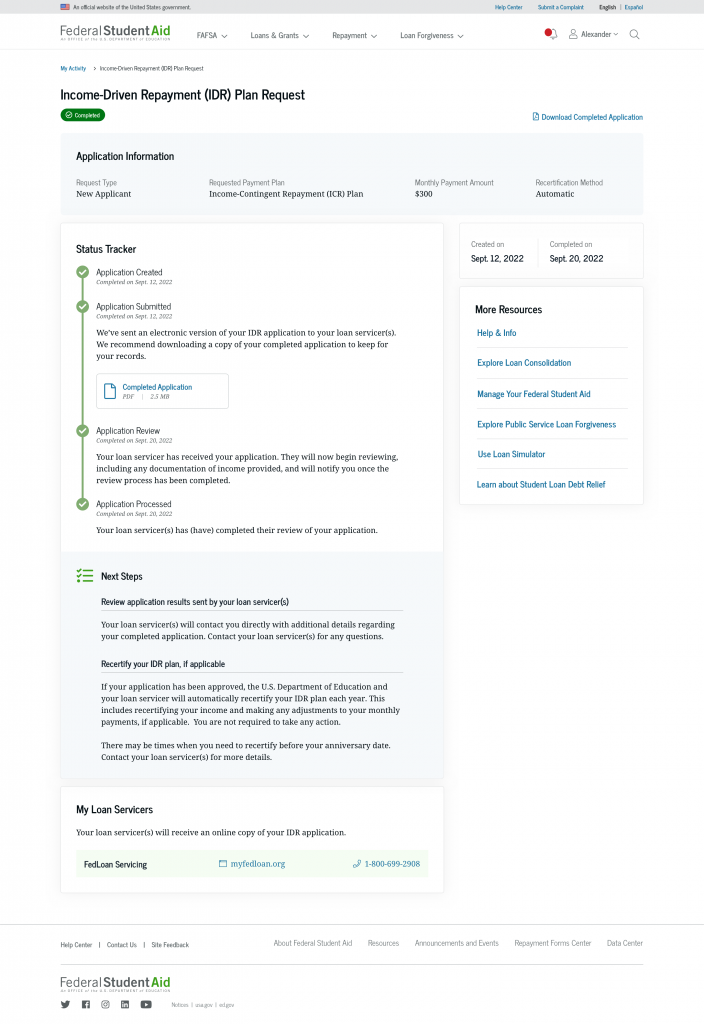
- Allow borrowers to track their apps via their FSA account
- Provide IDR borrowers a payment count and progress toward ID
forgiveness. Provide more clarity around IDR forgiveness to reduce false hope around early forgiveness - Remove the cosign flow (aligns with new IDR regulations)
Results
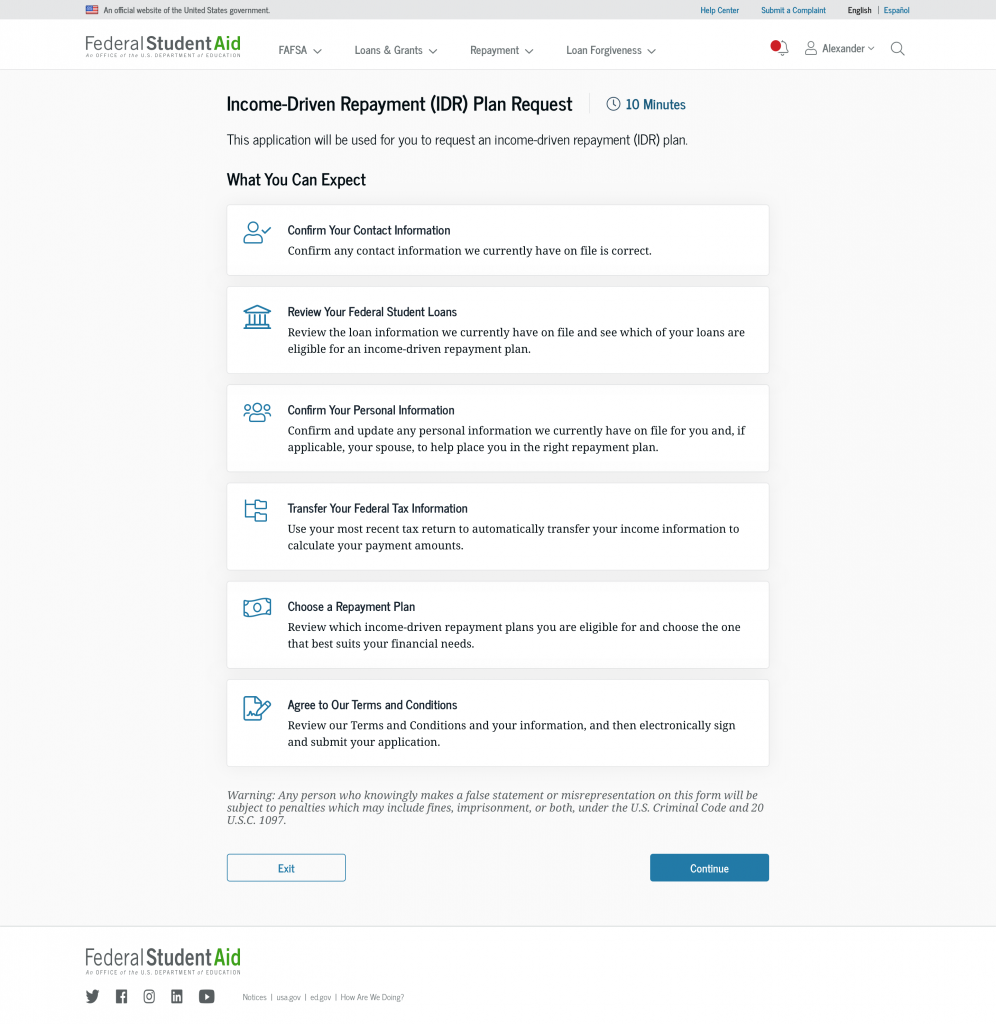
After rounds of usability testing, we felt confident in several new aspects of the application and flow.


High-Fidelity Mockups
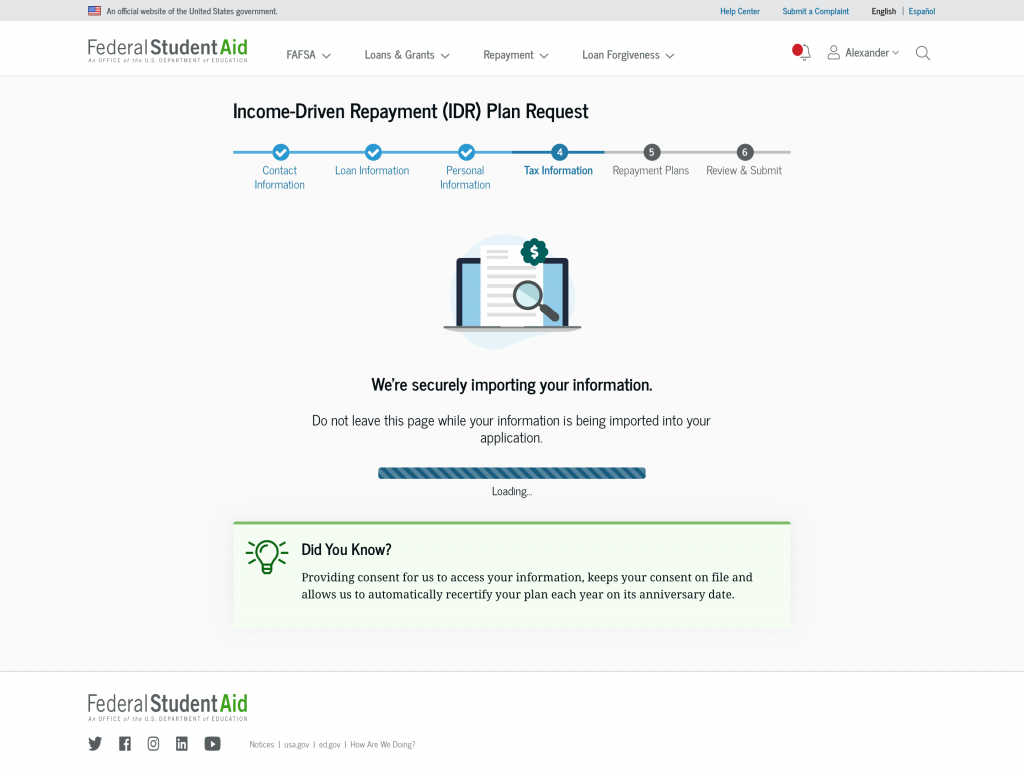
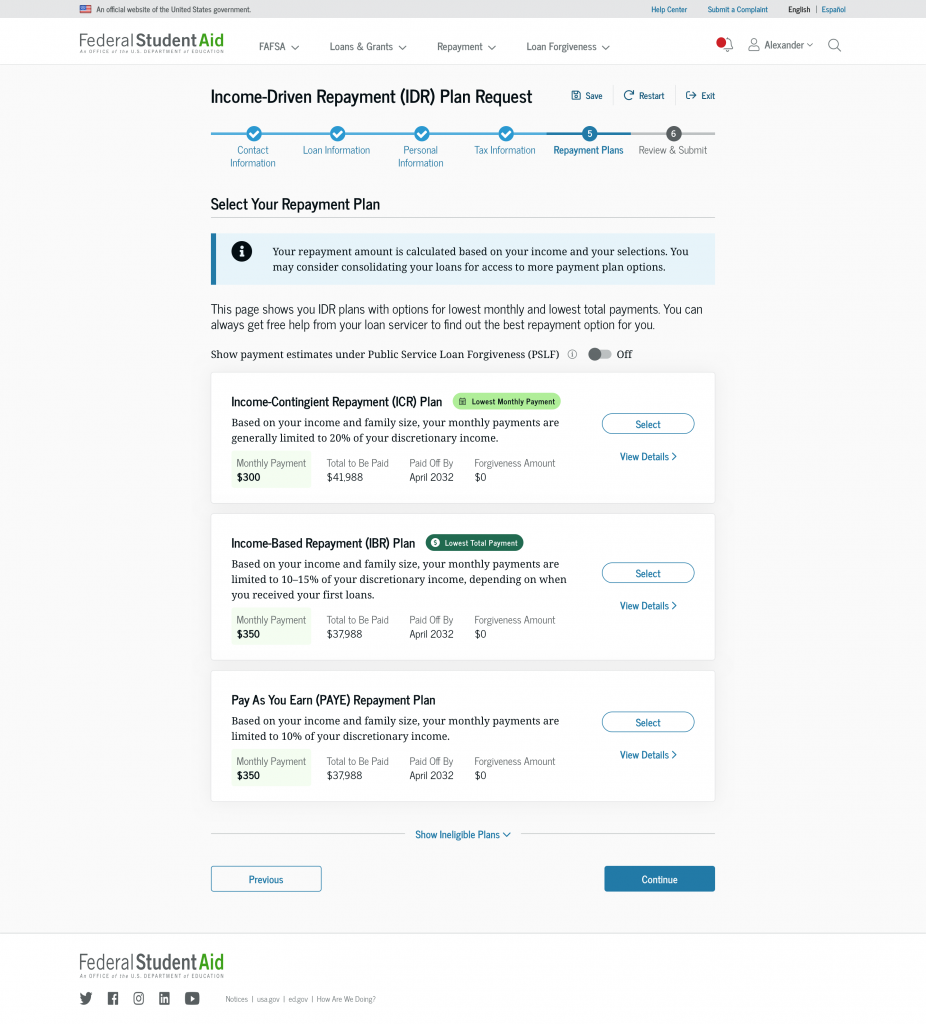
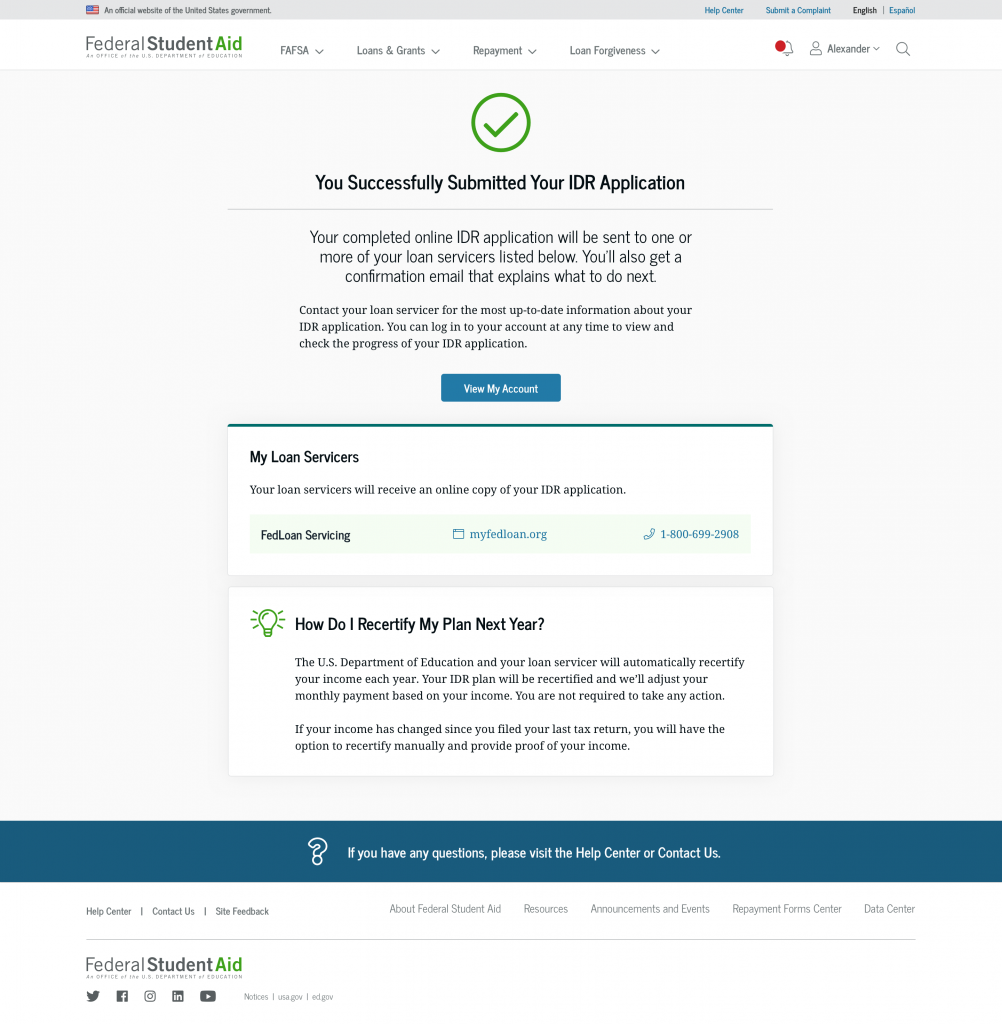
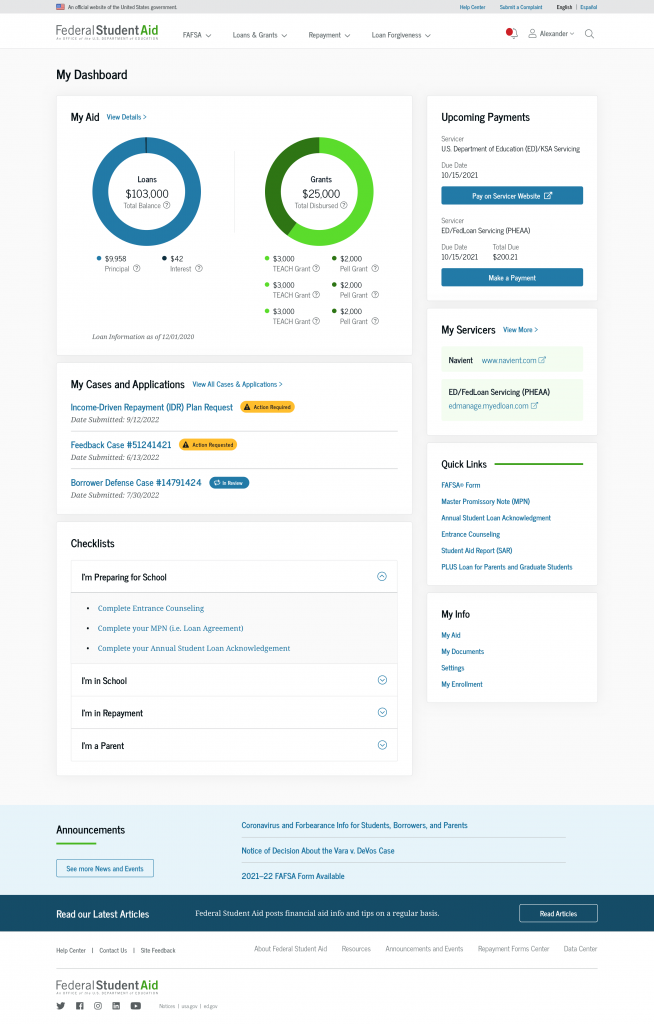
Autorecertification
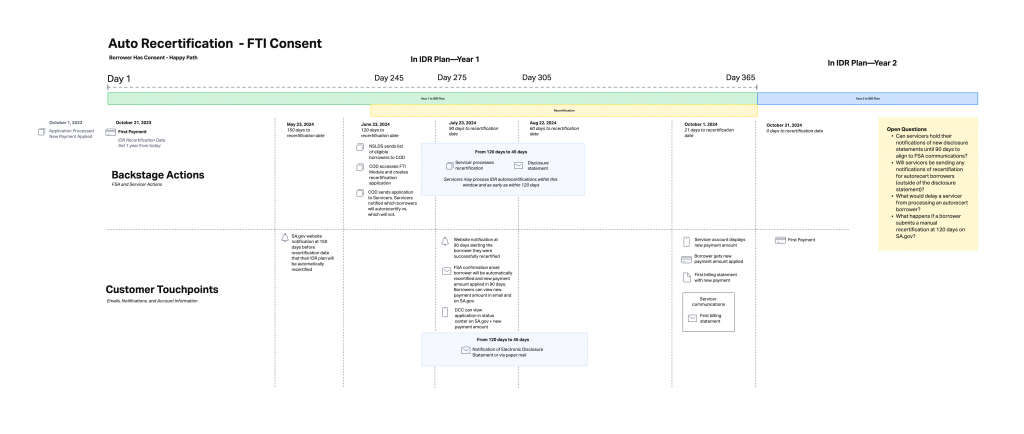
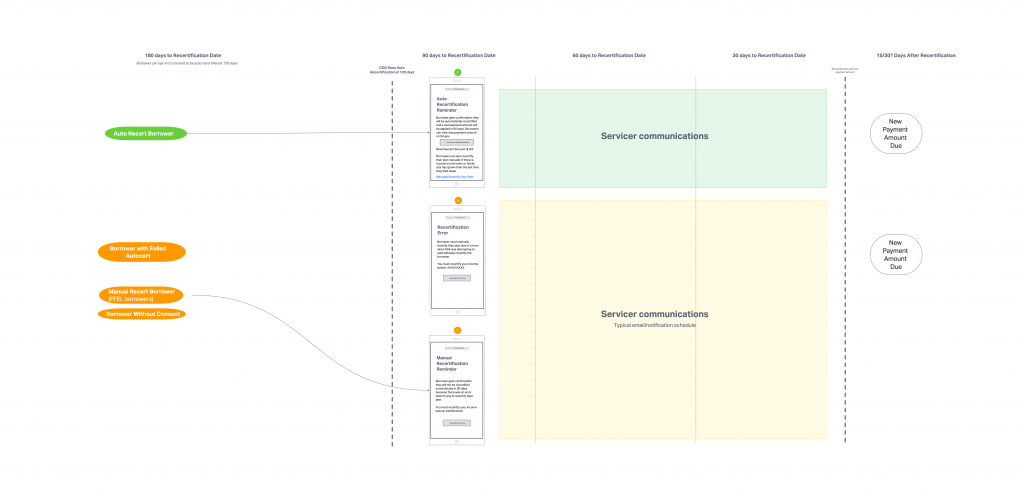
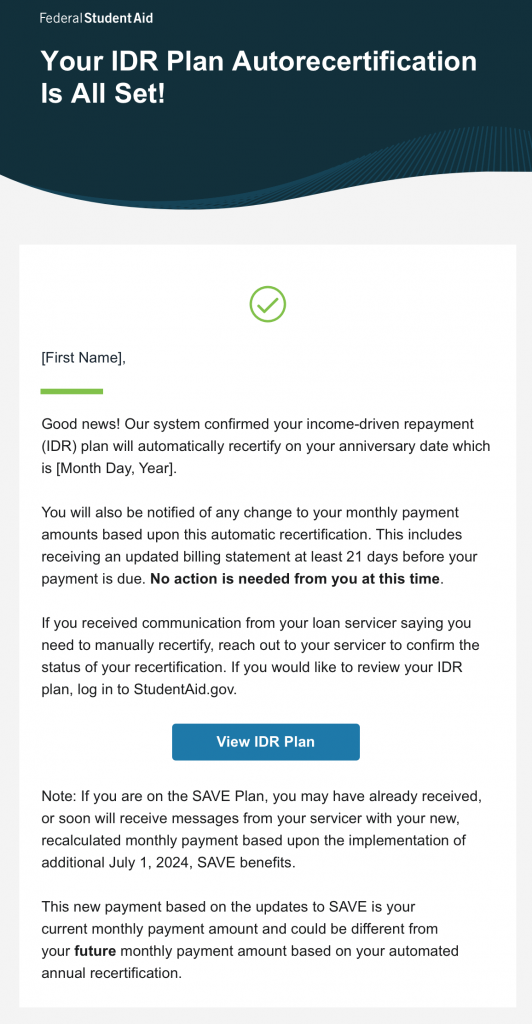
In addition to launching a new application, business process, and a new user experience, we also launched a new “autorecertification” process. This process allowed us to “recertify” a borrower’s income without them needing to do anything. We would simply email them and let them know if it was happening. If their income changed since their last tax return, they could simply do a recertification on their own and override the automatic one. We knew we needed to:
- Provide proper notification to a borrower about payments that are changing and give them time to adjust and recertify on their own
- Reduce the burden on borrowers that don’t need to take any action (one win was getting approval to place the monthly payment amount in an email so a borrower doesn’t actually have to log in to view anything)
- Make the process feel natural and keep the borrower in control
Results
- Developed and implemented an entirely new income-driven repayment plan and application which reduced the overall time to completion by 5 minutes.
- Increased the overall satisfaction score from 82% to 89%.
- Designed an “autorecertication” process where student loan borrowers don’t have to reapply each year, saving borrowers millions in lost hours filling out forms.
- Significantly reduce paper submissions by marketing the new IDR application and ensuring loan servicer customer service reps drive callers toward the online application.
- Helped increase IDR enrollment to more than 10 million student loan borrowers.
Lessons Learned
- Early stakeholder interviews were critical to establish trust with the project team, as well as loan servicers back-office processing folks.
- Allowing an initial discovery research sprint saved development costs because we could focus on drafting contract requirements with a high confidence in knowing what the system needed to support to deliver a user experience that matches user needs and goals.
- Opening up usability testing sessions to the entire project team helped create early buy in for our research efforts.